
Last updated November 24, 2026
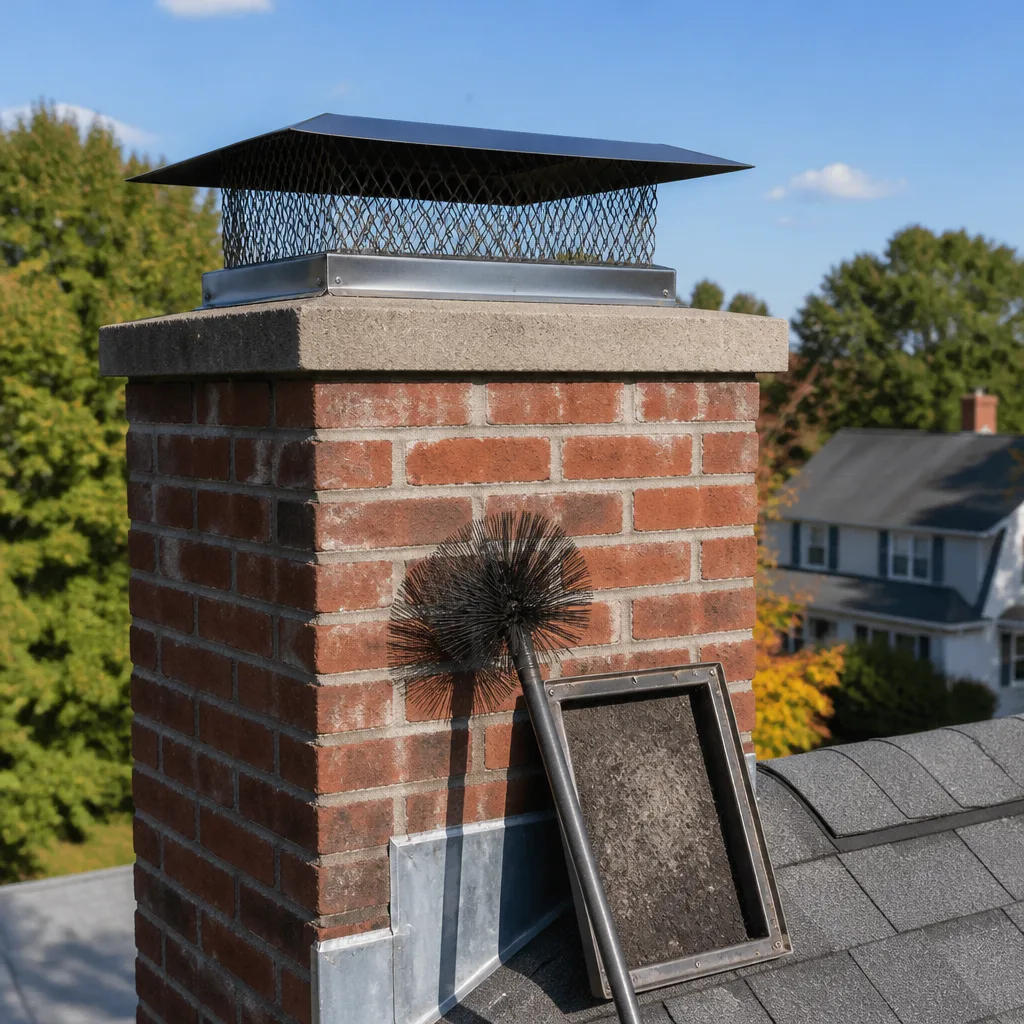 Sweep & inspection
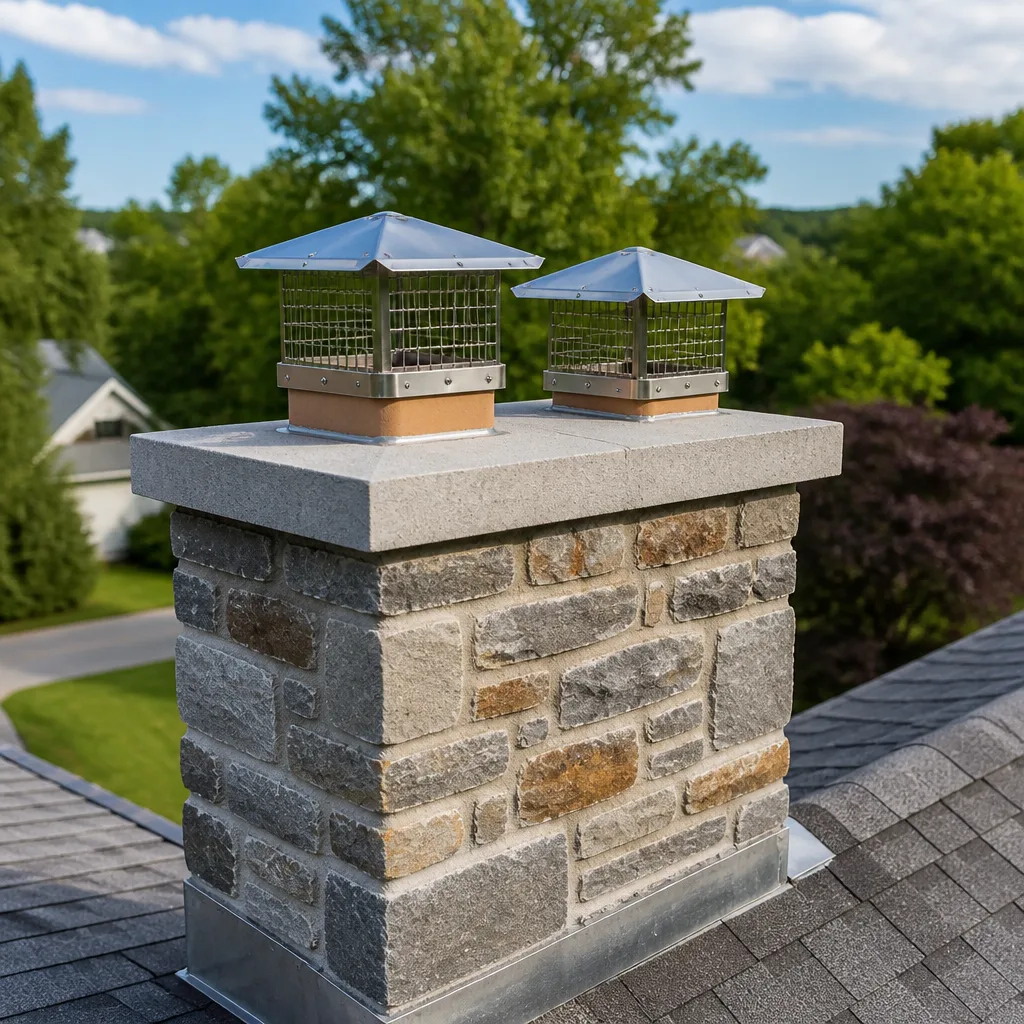 Caps & crowns
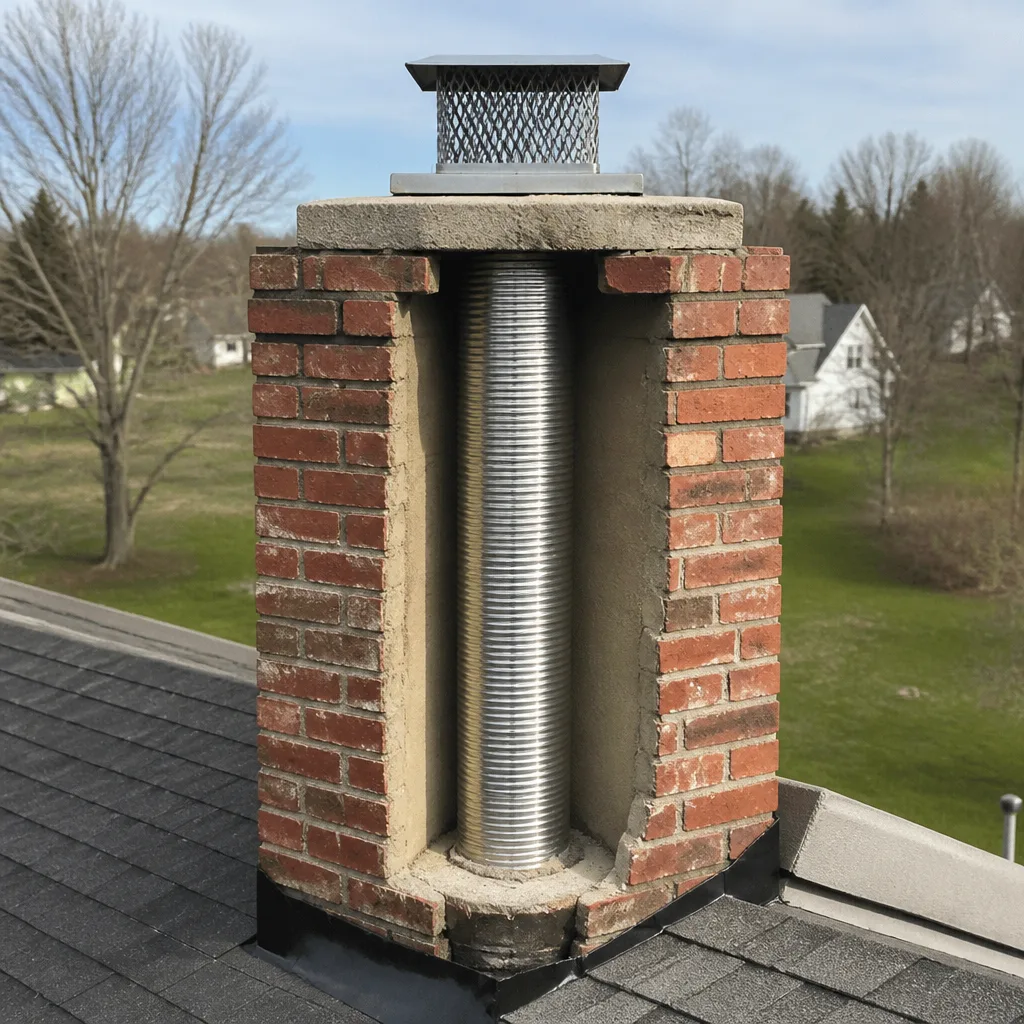 Flue relining
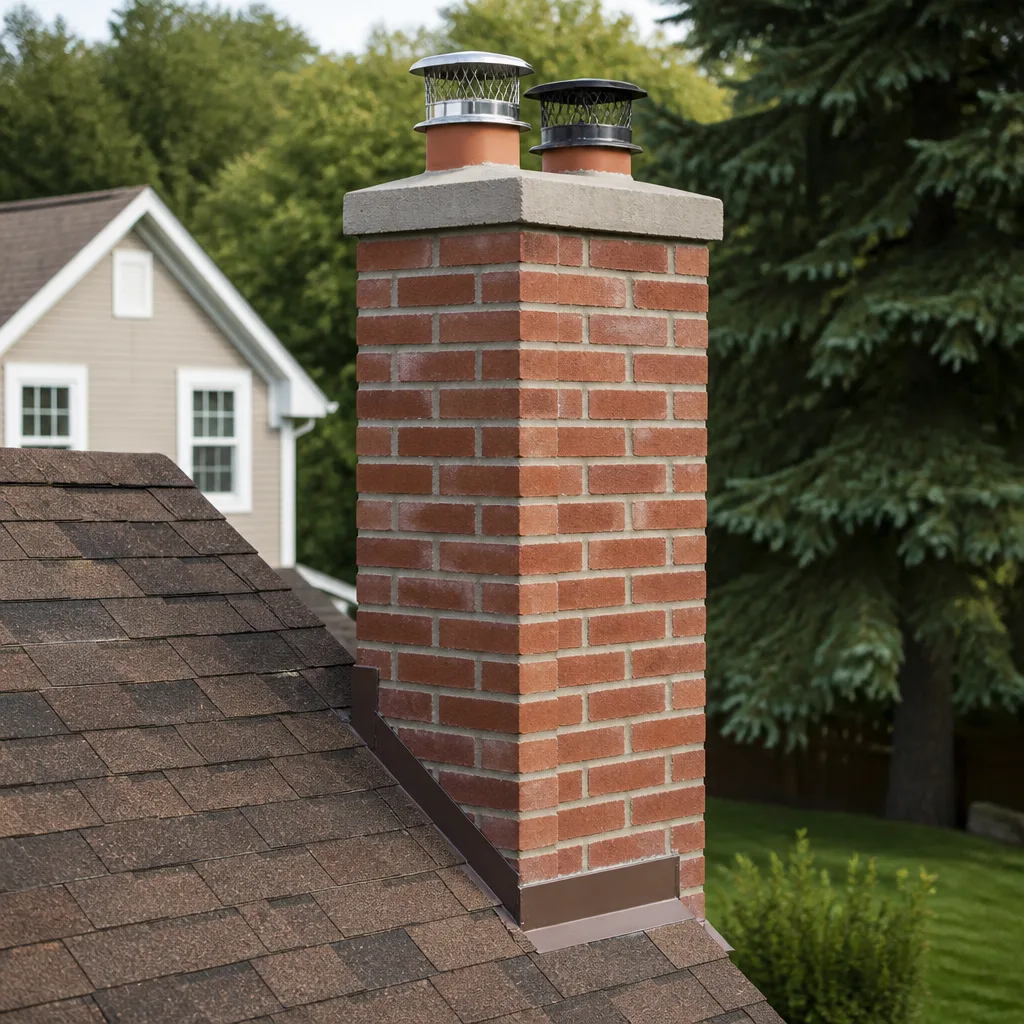 Masonry repair
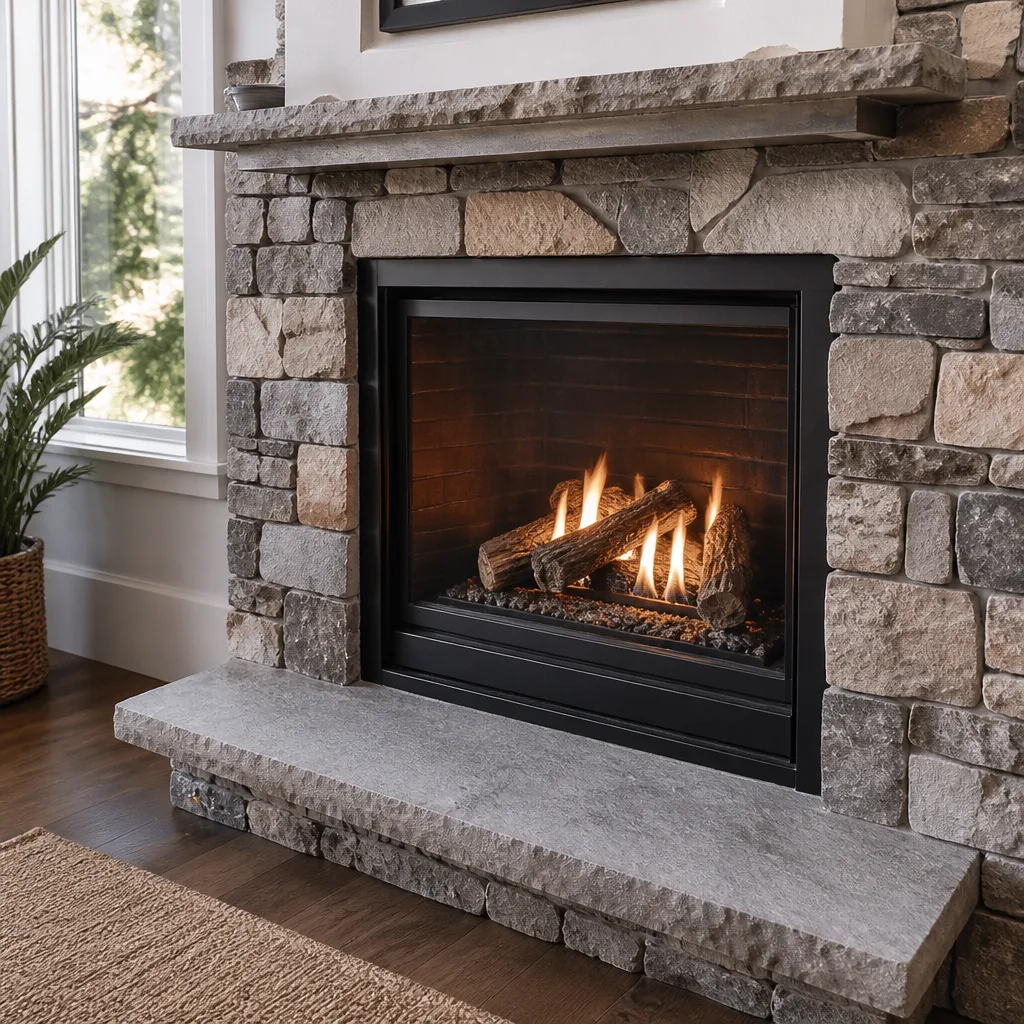 Gas fireplace service
Level 1 sweep and inspection to the NFPA 211 annual standard - flue, crown, cap, and flashing checked and photographed
Chimney sweep logs do not sweep chimneys. They loosen some creosote - which then falls where a brush and vacuum still have to collect it.
Chimney Sweep Maintenance Checklist for The Heights Homeowners
The chimney on a 1940s Heights bungalow shares almost nothing structurally with the prefab fireplace in a newer townhome a few blocks away, yet most maintenance checklists treat them identically. That’s the mistake we see most often. The age and construction of your stack determine which components fail first, which items you can safely handle with a flashlight, and which ones need a trained eye before the burning season opens. This guide walks through a task-by-task sequence built for the older craftsman and bungalow-era chimneys common in The Heights, sorting each checkpoint by location and by who should do it.
Quick Answer
A chimney maintenance checklist for The Heights homeowners should cover six owner-visible checkpoints (crown, flashing, exterior masonry, smoke chamber, firebox, damper) plus an annual professional sweep and inspection. On older Heights homes, watch for spalling brick and eroded lime-mortar joints, which degrade faster than the brick in newer construction. Anything that affects the flue’s interior or the firebox structure needs a camera scan and a trained technician, not a spot check from the ground.
Styles & brands we work with
- Sweep & inspection
- Caps & crowns
- Flue relining
- Masonry repair
- Gas fireplace service
Table of Contents
- Why The Heights’ Older Chimneys Need Their Own Checklist
- Exterior Checkpoints: Crown, Flashing, and Masonry
- Interior Checkpoints: Smoke Chamber, Firebox, and Damper
- Flashlight and Mirror vs. Camera Scan: When Each Is Enough
- Tasks That Reset the Inspection Clock vs. Tasks That Only Defer the Problem
- The Seasonal Maintenance Sequence, Step by Step
- How to Log and Date Each Checklist Cycle
- What Product Names Tell You About the Quality of a Repair
Why The Heights’ Older Chimneys Need Their Own Checklist
In The Heights, the housing stock spans roughly a century. A craftsman bungalow from the 1930s or 1940s typically has a solid-masonry chimney built with soft lime mortar and common brick, sometimes with a cast-iron damper that predates modern throat-damper design. A mid-century ranch a few blocks over may have a different flue configuration entirely. Both behave differently from a newer home with a factory-built firebox and a stainless liner.
That matters because the failure points aren’t the same. Lime mortar in older Heights masonry erodes and the joints recede, which lets water into the brick and eventually causes spalling: the brick face flakes and falls away, exposing a softer core that absorbs more moisture. Common brick from that era is softer than modern facing brick and won’t tolerate repeated wet-dry cycles the way a newer stack will. Meanwhile, a newer prefab firebox has its own wear pattern on the refractory panels and the damper assembly.
Our mild winters shape the schedule too. We don’t get a hard freeze that cracks masonry overnight, but we do get humid summers and a shoulder season when wood sits and cures. Chimneys in The Heights spend most of the year in warm, humid air, then start handling hot flue gas once the first cool evenings arrive. That swing is a big part of why a pre-season inspection matters more here than in colder markets.
If you’ve had a bargain sweep that cleaned the flue but couldn’t tell you the condition of your firebox or your crown, you already know the gap this guide is meant to close. A checklist is only useful if it points to who does what and in what order. The rest of this page does exactly that.
Exterior Checkpoints: Crown, Flashing, and Masonry
The exterior is where most homeowners can see the earliest signs of trouble, and it’s also where “bad” is easy to identify once you know what you’re looking at. Stand back from the house with binoculars or use a steady zoom lens on your phone. Don’t climb the roof.
The crown. The crown is the sloped concrete or mortar cap on top of the stack that sheds water away from the masonry. A good crown slopes away from the flue on all sides with no cracks. Bad looks like this: visible cracks wider than a hairline, a crown that’s flat or has started to separate from the brick below, or a crown with a visible soft spot or spall. A failed crown is one of the most common sources of slow water damage we see on older The Heights chimneys.
The flashing. Flashing is the metal that seals the chimney where it meets the roof. Good looks like tight, continuous metal with no lifting edges and sealant that hasn’t dried and pulled back. Bad looks like lifted or rusted flashing, gaps at the roof joint, or a stain on the ceiling inside the house below that line. That interior stain is your strongest signal that the flashing is failing.
Exterior masonry. Good looks like consistent mortar joints with no visible receding and brick faces that are intact. Bad looks like these patterns:
- Spalling brick: faces that have flaked, crumbled, or fallen, exposing a soft interior.
- Eroded mortar joints: joints that have receded noticeably from the brick face, so the masonry looks “recessed.”
- White staining (efflorescence) that reappears after rain, which points to water moving through the masonry.
- Any brick that can be flaked or crumbled by hand at the surface, which on older Heights stacks is a real signal.
We install chimney caps and crowns as part of the same service we use for sweeping and inspection, using materials from chimney cap & crown work through to full crown replacement. Cap and crown work is weatherproofing. It’s the cheapest repair on your chimney that prevents the most expensive one.
Interior Checkpoints: Smoke Chamber, Firebox, and Damper
Inside the firebox, the checkpoints shift from what you can see at a distance to what you can see up close. Use a strong flashlight and a hand mirror to look up into the smoke chamber above the damper, and don’t stick your head inside the firebox.
The smoke chamber. The smoke chamber is the tapered space just above the damper that funnels smoke into the flue. Good looks like smooth, intact masonry with no heavy creosote buildup and no gaps at the corbel. Bad looks like corbelled brick with rough edges, heavy glazed creosote (shiny, tar-like, hard to the touch), or visible gaps where the smoke chamber narrows. On older Heights homes, the smoke chamber is often the transition point where heat and creosote combine to cause trouble.
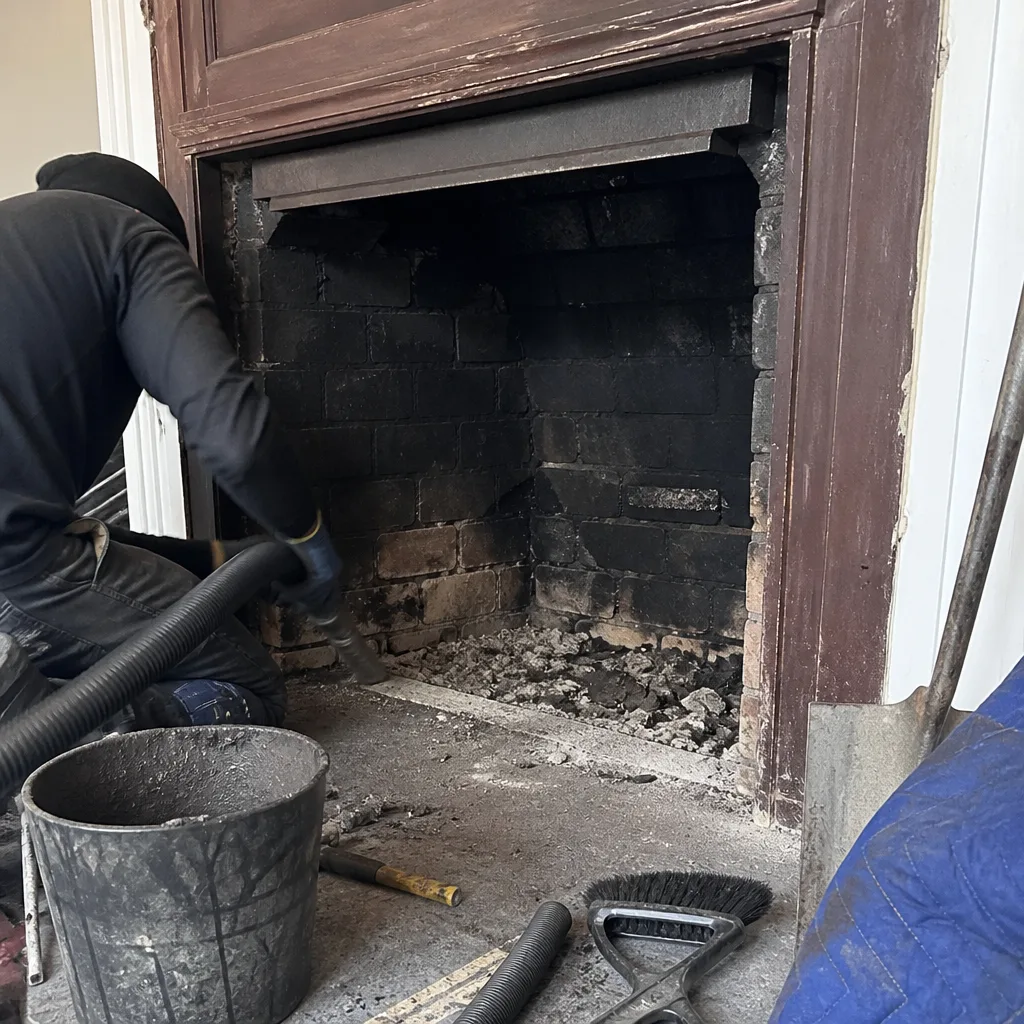
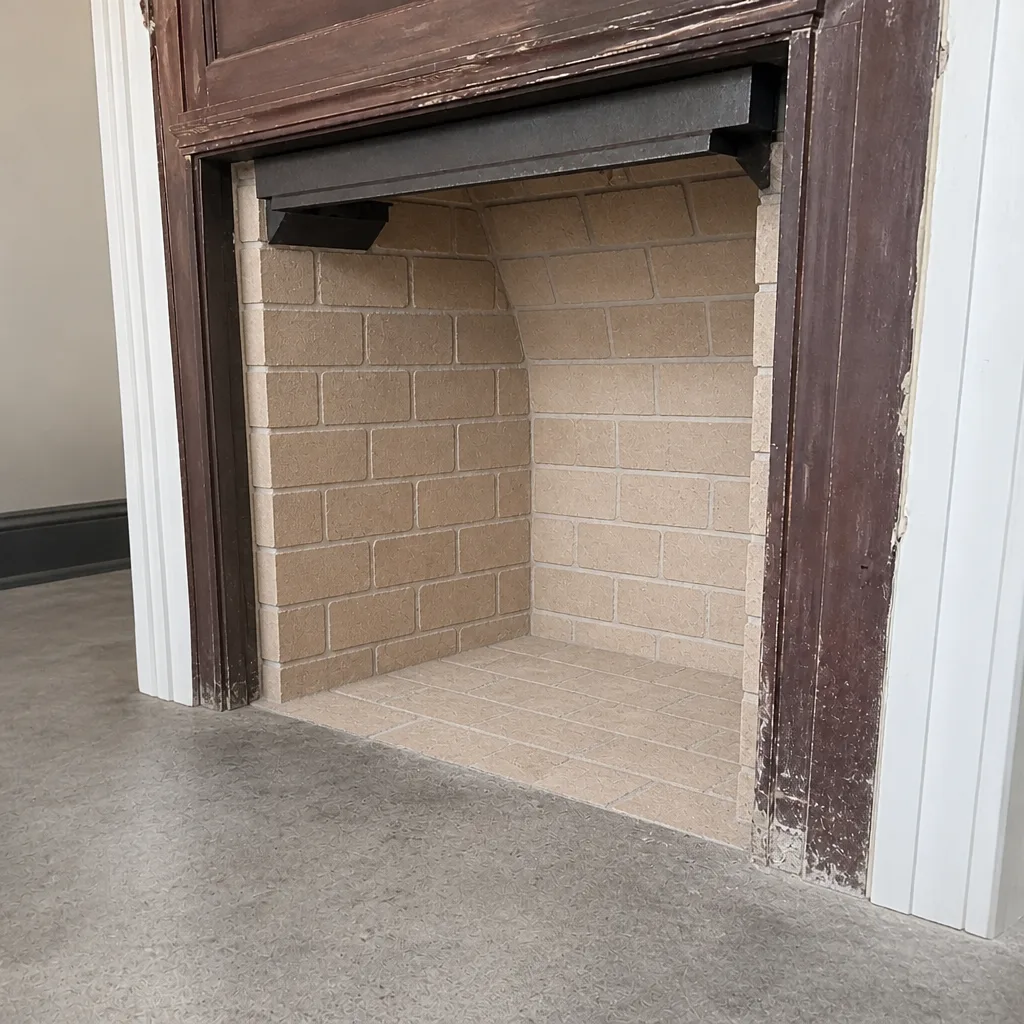
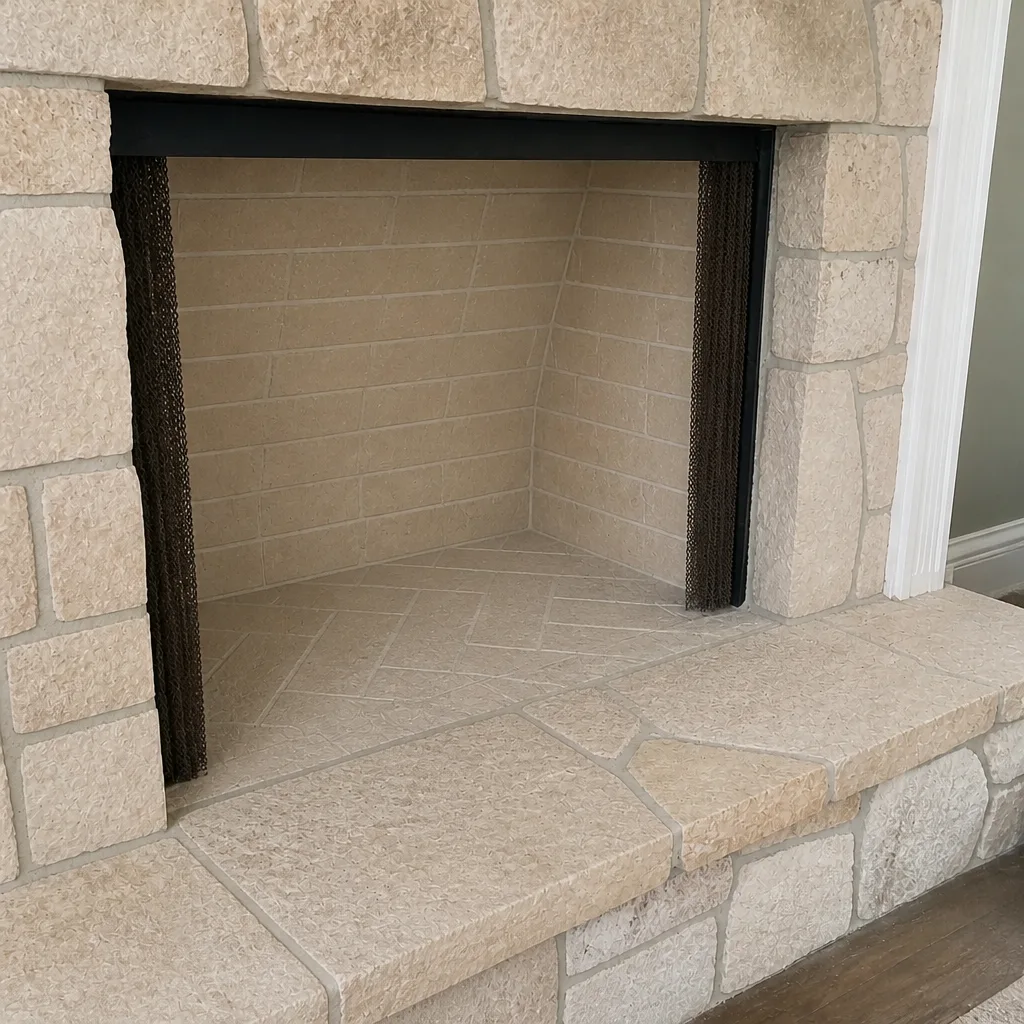
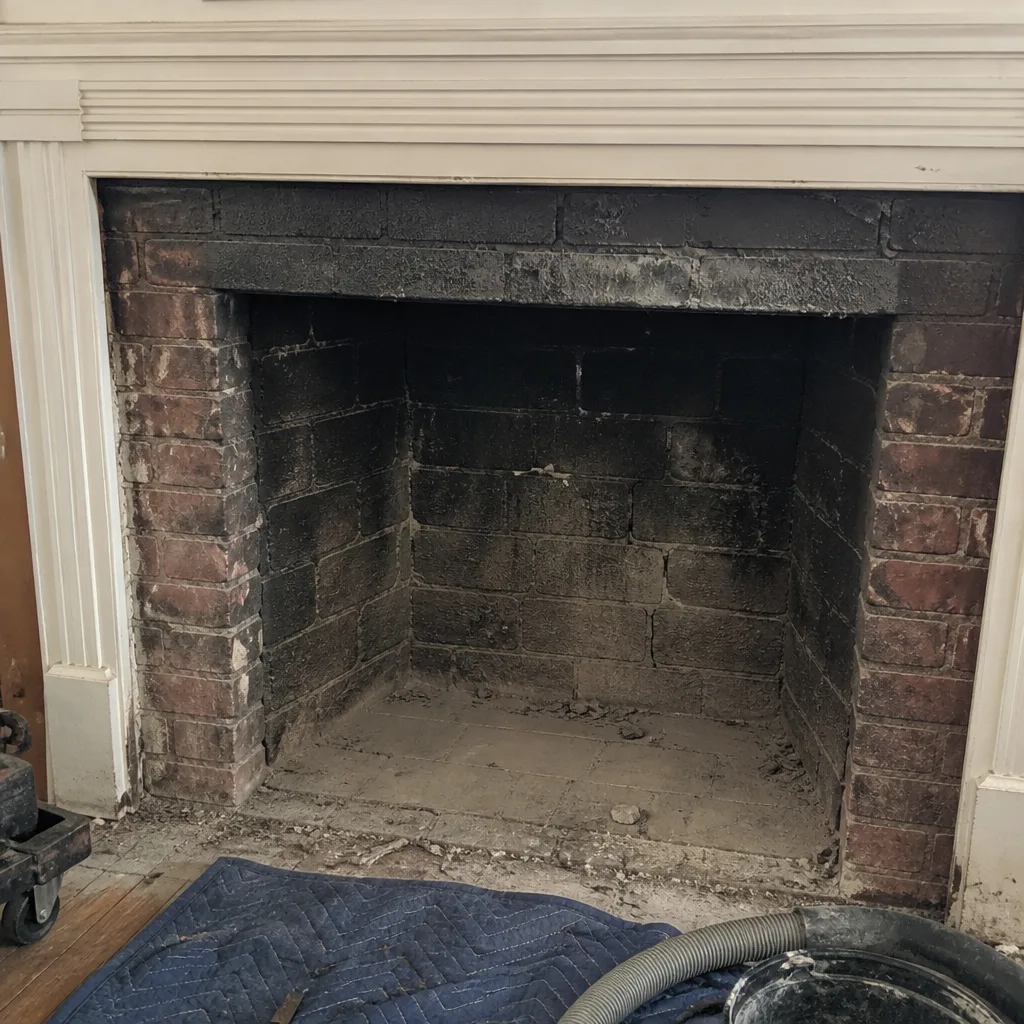
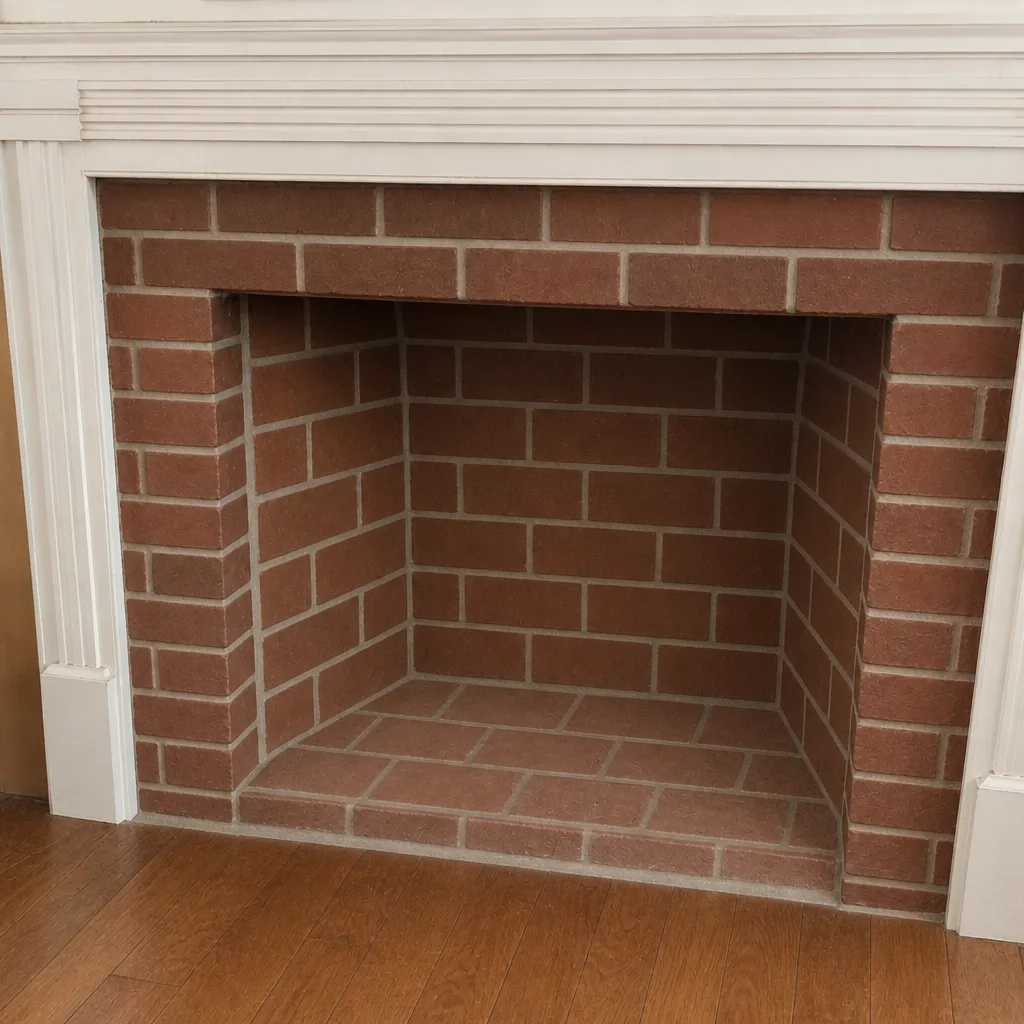
The firebox. The firebox is the masonry box where the fire actually burns. Good looks like intact firebrick with joints in place and no gaps at the base. Bad looks like loose or missing firebrick, a firebox floor that has dropped, or cracks in the rear wall. On an older Heights home, the firebox is often the single most degraded component and the one most easily restored without demolition. HeatShield resurfacing is designed to restore a deteriorating firebox from the inside, which lets us keep the original fireplace structure rather than tearing it out.
The damper. The damper is the metal plate that seals the flue when the fireplace isn’t in use. Good looks like a damper that opens fully, closes flush, and seats evenly. Bad looks like a damper that sticks, seats crooked, or has rusted into one position. Cast-iron dampers pre-dating modern throat-damper design, which we see in many older The Heights homes, often corrode at the hinge over decades. A stuck-open damper lets heat and conditioned air escape year-round. A stuck-closed damper is genuinely unsafe to light.
A damaged firebox, smoke chamber, or damper is a reason to stop lighting fires until a professional has looked at it. Our fireplace repair work exists specifically for this zone of the chimney.
Flashlight and Mirror vs. Camera Scan: When Each Is Enough
A flashlight and mirror will tell you whether the firebox and the lower smoke chamber look intact. They won’t tell you what’s happening higher up the flue. That’s the honest answer, and it’s the one most chimney guides skip.
Here’s the rule we use. A flashlight-and-mirror check is enough to spot obvious firebox problems, a stuck damper, and heavy creosote at the smoke chamber transition. It is not enough to assess the flue’s interior above the throat. That section, especially on an older masonry chimney, is where hidden cracks, gaps, and separated tile liners live. Those are the issues that lead to carbon monoxide risk and to a chimney fire that starts in a place you can’t see.
That’s where a camera scan earns its keep. A camera scan is the right call when:
- The chimney hasn’t been inspected in more than a year.
- You’ve had any sign of water intrusion, a stained ceiling, or a smoky burn.
- The home is older and hasn’t had a documented inspection on record.
- You’re buying or selling the house, and the other side wants a written assessment.
- You’re planning to install a new insert or appliance and the flue’s condition is unknown.
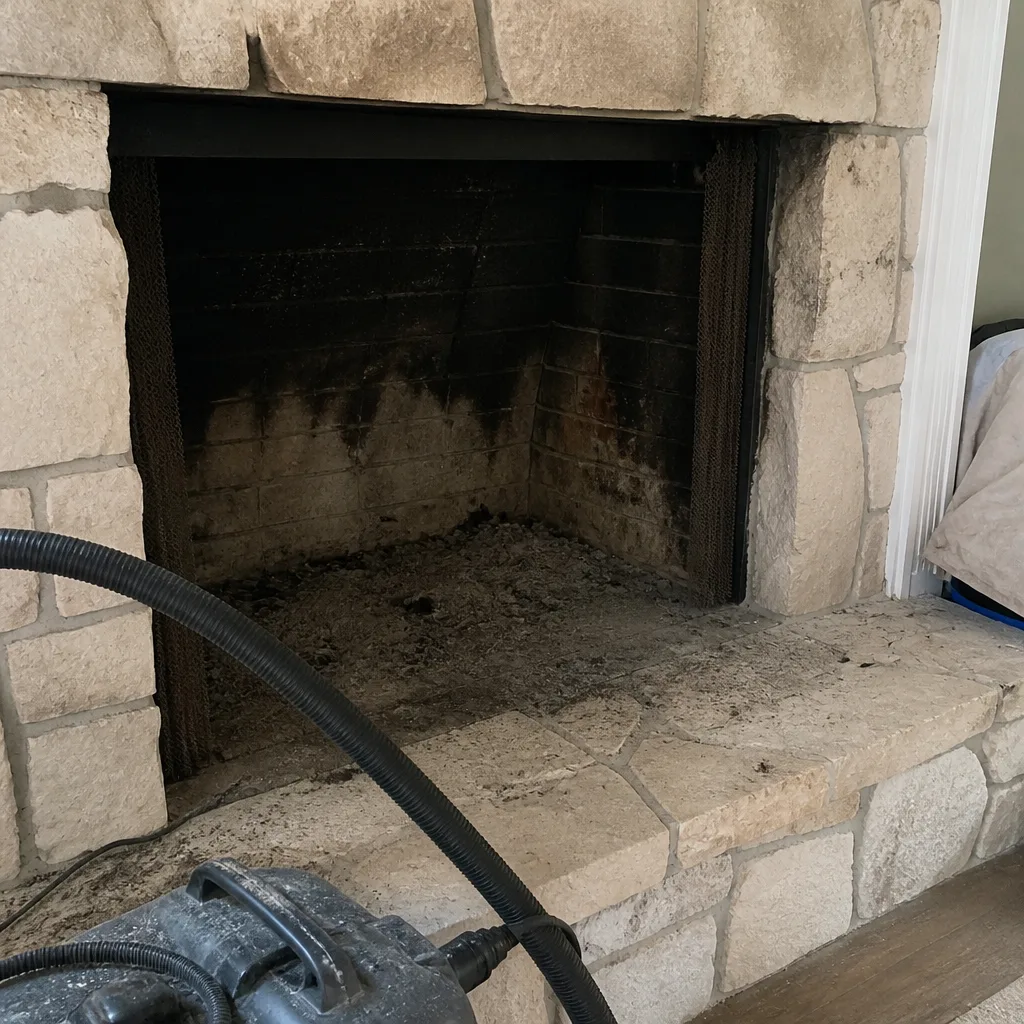
In our experience, the camera scan is the part of the job homeowners value most, and also the part they’re most likely to argue about with a sweep-only service that doesn’t carry the equipment. A trained technician can point to specific images and say which ones need repair and which are normal wear for a chimney of that age. We do this as part of our chimney sweep service, so the picture and the recommendation come from the same visit.
Tasks That Reset the Inspection Clock vs. Tasks That Only Defer the Problem
Not every maintenance task is equal. Some reset the clock on your next inspection; some just buy you time. Knowing which is which keeps you from thinking you’re covered when you’re not.
Tasks that reset the clock:
- A professional sweep and inspection. This clears creosote buildup and produces a written assessment of the flue, firebox, and crown. It resets your inspection interval.
- A liner installation. A properly installed stainless liner, using DuraFlex or comparable professional-grade materials, replaces the flue as the safety barrier. It resets the timeline for flue-condition assessment because the flue has been rebuilt to a known baseline.
- A HeatShield firebox restoration. Resurfacing the firebox brings a deteriorating firebox back to a sound condition and gives you a clean baseline to maintain from.
- A cap and crown replacement. A new crown and a properly seated cap stop the water intrusion cycle that drives most exterior degradation. That resets the timeline on exterior masonry repair.
Tasks that only defer:
- Spray-on sealers on exterior masonry. A sealer can slow water penetration, but it doesn’t restore eroded mortar joints. The joints still need repointing.
- Patching a spalled brick face without addressing why it spalled. If the crown or flashing is the source of the moisture, the patch will fail.
- Sweeping alone when the camera scan shows a damaged liner. The sweep clears creosote, but a compromised flue still needs a reline.
- Damper adjustment without examining the smoke chamber. A damper that seats crooked may be a symptom, not the problem.
In The Heights, the deferral items are usually the ones that get pushed a season or two because the fireplace still “works.” A fireplace can work and still be unsafe. The reason to reline a flue isn’t aesthetics; it’s that a properly lined flue is the difference between safe combustion and carbon monoxide risk. If a camera scan shows a liner problem, sweeping alone doesn’t reset your clock, it just delays the repair.
The Seasonal Maintenance Sequence, Step by Step
This is the order we recommend for a The Heights home, especially an older one. It’s the order that lets you catch the biggest risks before the burning season starts and keeps you from paying for repairs that a later item would have made unnecessary.
- Walk the exterior with binoculars. Check the crown, flashing, and masonry for cracks, lifted edges, spalling, and receded joints. Note what you see; you’ll want that logged.
- Look inside the firebox and up into the smoke chamber with a strong flashlight and a hand mirror. Stop if you see heavy shiny creosote, loose firebrick, or a dropped firebox floor.
- Test the damper by hand. Open it fully, close it, and check that it seats. If it sticks or won’t seat, add it to the list for the technician.
- Book a professional sweep and inspection. The sweep clears creosote, the inspection includes a camera scan of the flue and a written report on the firebox, smoke chamber, damper, crown, and masonry.
- Review the camera images with the technician. Ask which findings need repair this season, which can wait, and which are simply age-appropriate wear. A technician who can’t show you the images is a technician who can’t tell you what’s actually going on.
- Order repairs in priority. In our experience, the priority order is usually: flue liner or firebox (safety), then crown and flashing (water), then masonry joints (structure). Cap and crown come early because they prevent the moisture that drives everything downstream.
- Book the sweep for the same time next year and record the date in your log. The next inspection should start from the previous one’s notes.
Mild winters in The Heights mean the “closed season” for the fireplace is short. The practical window to do pre-season work is the shoulder between the last fire of one season and the first of the next, which is why the scheduling calendar gets tight on the front end. Plan ahead rather than waiting until the first cold snap.
How to Log and Date Each Checklist Cycle
If you’ve ever sold a house, you know how quickly a homeowner’s memory of “when did we last have that looked at” falls apart. A written log solves that, and it’s also the version an insurance adjuster or a future buyer will trust. Nothing about the log is complicated. It just has to be consistent.
We suggest a simple one-page entry per cycle with these fields:
- Date of each inspection and sweep. Include the technician or company name, the inspector’s written findings, and whether a camera scan was performed.
- Photos. A photo of each checkpoint (crown, flashing, exterior masonry, firebox, smoke chamber, damper) from the same angle each cycle, so changes are obvious.
- Findings and actions. What was found, what was done, and what was deferred with a reason.
- Materials used. The brand and type of any liner, firebox restoration, cap, or crown installed, using the manufacturer’s name from the invoice.
- Next inspection date. The date you committed to with the technician.
This is also how an inspection service creates a documented baseline for a real-estate transaction. If you’re selling a The Heights home, a written inspection report that identifies current conditions and lists what’s been done since the last sweep gives the buyer’s inspector something specific to work with, rather than a page of general observations.
Keep the log in a folder with the flue’s measurements and any manufacturer documentation. When you eventually need a liner replacement or a firebox restoration, the technician will use the previous images to know exactly what changed and what didn’t.
What Product Names Tell You About the Quality of a Repair
Homeowners often ask why the product brand on a repair matters. The short answer is that a chimney system is only as good as the materials inside it, and the material inside a liner isn’t visible once the job is done. Brand names on the invoice are the only way you’ll know what went in.
We work with professional-grade products from DuraFlex, HeatShield, Gelco, Olympia Chimney, Famco, and Copperfield. Those are the names specified by professional chimney contractors nationwide, and they carry specific material and application standards. When a sweep-only service offers to reline a flue with “a good stainless liner,” there’s no way to tell from that description whether you’re getting a DuraFlex system or a generic substitute. Ask for the product name.
What that means in practice, for a The Heights homeowner:
- HeatShield lets us restore a deteriorating firebox from the inside without demolition, which for an older Heights fireplace preserves the original structure.
- DuraFlex is the family of materials we use when a flue needs a new liner, which is one of the most common safety deficiencies identified during a home inspection.
- Gelco, Olympia Chimney, Famco, and Copperfield cover the caps, crowns, and connector components that make up the rest of the system.
The point isn’t to memorize brands. It’s to know that if your chimney needs repair, the conversation should include a specific product name. That’s how you separate a real repair from a generic one.
Common Mistakes to Avoid
- Treating a sweep as a full inspection. A sweep clears creosote; an inspection assesses the flue, firebox, and smoke chamber. Booking only the sweep leaves the safety picture incomplete.
- Judging the chimney from the ground. The crown and flashing are visible from a distance, but the flue’s interior isn’t. A camera scan is the only reliable way to see above the firebox on an older The Heights home.
- Assuming a sealer fixes eroded joints. Sealers slow water entry but don’t restore mortar. Repointing is the fix; the sealer is at best a deferral.
- Ignoring a stuck damper. A cast-iron damper that won’t seat can let heat and air escape year-round, and one stuck closed is unsafe to light. It’s a repair item, not a quirk.
- Skipping the log. Without a dated record of inspections and repairs, a future buyer’s inspector or an insurance adjuster has nothing to go on, and you’ll re-pay for assessment you already had.
- Scheduling a liner repair before checking the crown. If the crown is still leaking water into the masonry, a new liner doesn’t solve the underlying problem. Fix the water source first.
- Taking a repair recommendation from a company that can’t show you the camera images. Ask for the images. A technician with nothing to hide will share them; one who won’t probably has nothing to show.
See the difference
 Before
 After
 Before
 After
 Before
 After
When to Call a Professional
Call a professional if you see heavy shiny creosote in the smoke chamber, loose or missing firebrick, a firebox floor that has dropped, a damper that won’t seat, any spalled brick or receded mortar on the exterior, or a ceiling stain below the chimney line. Call if the chimney hasn’t been inspected in more than a year, if you’re selling or buying a The Heights home, or if a camera scan has never been done on the flue. We answer 24/7 and dispatch Sunday through Friday, 7am to 7pm. Our technicians have up to 11 years of experience, and the sweep and the repair come from the same visit, so you’re not handing off between vendors. Chimney Sweep The Heights offers free estimates in The Heights. Call (877) 810-4894.
Frequently Asked Questions
Once a year, and always before the burning season starts. For a wood-burning fireplace that gets regular use, an annual sweep and inspection is the baseline. An older The Heights home with a solid-masonry chimney benefits from the camera scan as part of that annual visit, because the flue’s interior is exactly what a flashlight can’t assess. Call (877) 810-4894 to book a sweep and inspection.
You need a new liner when a camera scan shows a cracked or separated flue liner or a damaged firebox, because that’s a combustion-safety issue. You don’t need one because a company says so on the phone. Ask to see the camera images. A properly lined flue is the difference between safe combustion and carbon monoxide risk, but that decision should be based on evidence you can look at, not on a sales conversation. Call (877) 810-4894 for a camera inspection and a written assessment.
Not for the flue above the firebox. A flashlight and mirror can spot a firebox problem or a stuck damper, but neither can see up the flue with enough detail to find a hidden crack or separated liner tile. That’s exactly where a camera scan earns its keep. If your chimney hasn’t been camera-inspected in over a year, that’s the missing piece. Call (877) 810-4894 to schedule one.
Creosote builds up inside the flue and, in the worst case, can ignite. The less visible part is that the annual visit is also where a failing crown, weakening mortar, or a deteriorating firebox gets caught early, when repair is smaller. Skipping it doesn’t cause a problem the day you skip it; it removes the opportunity to catch one before it becomes structural. Call (877) 810-4894 if it’s been more than a year.
A sweep-only service can clean the flue, but it usually can’t install a liner, restore a firebox, or replace a crown. When the sweep turns up a repair, you’re handed off to another contractor, and the diagnosis and the fix end up with two different companies. A full-service specialist handles both, so the same technician who found the problem can quote and complete the repair. If that handoff has happened to you before, call (877) 810-4894.
Safety first: liner and firebox findings can’t wait, because they affect combustion safety. Water-intrusion repairs, like a failed crown or flashing, should be scheduled before the next rainy season. Structural masonry repairs (repointing receded joints, replacing spalled brick) can often be phased over a season, but should be on a written plan with dates. A camera-based inspection gives you the information to make that triage call yourself. Call (877) 810-4894 for a free estimate and a written assessment.
The Bottom Line
Your chimney’s age and construction drive its maintenance checklist. Older Heights homes need exterior masonry attention, firebox assessment, and damper inspection every year, not just a flue sweep. The owner-visible checkpoints (crown, flashing, masonry, smoke chamber, firebox, damper) catch the early warning signs; the camera scan catches what those checkpoints can’t see. Reset the inspection clock with a professional sweep and a documented report, defer the right items, and log every cycle. If it’s been more than a year since your last inspection, that’s the item to act on first. Call (877) 810-4894 for a free estimate. We answer 24/7, and we dispatch Sunday through Friday, 7am to 7pm, so the same team that finds the problem can fix it.
If you want a single point of contact for sweep, inspection, cap and crown, firebox, and relining work, Chimney Sweep The Heights is built for exactly that. We work with DuraFlex, HeatShield, Gelco, Olympia Chimney, Famco, and Copperfield, and we schedule the sweep and the repair together so nothing waits for a second vendor.
Written by the team at Chimney Sweep The Heights.